how to remove haloacetic acids from drinking water How to remove haloacetic acids in drinking water
Haloacetic acids (HAAs) are a concerning group of chemical compounds that can be found in our environment, more specifically in our drinking water. It is important for us to understand their environmental occurrence and potential risks they may pose to our health. Fortunately, there are ways to remove these undesirable substances from our drinking water to ensure its safety.
Environmental Occurrence of HAAs
In recent research, it has been found that HAAs can be detected in various environmental sources. Factors such as industrial activities, agricultural runoff, and improper disposal of waste can contribute to the presence of HAAs in our water bodies. This is concerning as these compounds have the potential to adversely affect both human health and the environment.
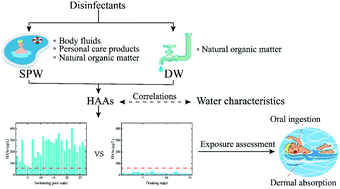
Potential Risks to Health
Exposure to HAAs through drinking water can have adverse effects on human health. Research has shown that long-term ingestion of water containing high levels of HAAs may increase the risk of gastrointestinal issues, kidney problems, and even certain types of cancer. Therefore, it is crucial to have effective methods for the removal of haloacetic acids from our drinking water supplies.
Removal of Haloacetic Acids in Drinking Water
 The image above illustrates the process of removing haloacetic acids from drinking water. It highlights the importance of employing advanced water treatment technologies to ensure the elimination of these harmful compounds.
There are various methods to remove HAAs from drinking water. One common technique is the use of activated carbon filters. These filters work by adsorbing the HAAs onto their porous surface, effectively removing them from the water. Reverse osmosis is another effective method that utilizes a semipermeable membrane to separate the HAAs from the water molecules.
Additionally, the use of ultraviolet (UV) disinfection can also help in reducing the levels of HAAs. UV light effectively breaks down the HAAs, rendering them harmless. Furthermore, ensuring proper water treatment practices and minimizing pollution sources can also aid in reducing the presence of HAAs in our water sources.
It is important for individuals, communities, and regulatory bodies to work together to monitor and regulate the levels of HAAs in our drinking water supplies. Routine testing and implementing appropriate treatment techniques can go a long way in safeguarding our health and well-being.
In conclusion, being aware of the environmental occurrence and potential risks of haloacetic acids is crucial. By understanding their presence and implementing effective removal methods, we can ensure the safety of our drinking water. Let’s take necessary steps to protect our health and the environment by staying informed and promoting responsible water management practices.
If you are searching about Haloacetic Acids In Your Drinking Water - RO System Reviews you’ve came to the right page. We have 5 Images about Haloacetic Acids In Your Drinking Water - RO System Reviews like Haloacetic Acids In Your Drinking Water - RO System Reviews, Haloacetic Acids In Your Drinking Water - RO System Reviews and also Haloacetic Acids In Your Drinking Water - RO System Reviews. Here it is:
Haloacetic Acids In Your Drinking Water - RO System Reviews
 www.osmowaterfilters.comacids
How To Sample Drinking Water For Haloacetic Acids (HAA5) Analysis - YouTube
 www.youtube.comacids water
How To Remove Haloacetic Acids In Drinking Water
theberkey.comacids osmosis berkey hydrate hidratado
Environmental Occurrence And Risk Assessment Of Haloacetic Acids In
Haloacetic Acids In Your Drinking Water - RO System Reviews
 www.osmowaterfilters.comacids osmosis
How to sample drinking water for haloacetic acids (haa5) analysis. Acids occurrence assessment. How to remove haloacetic acids in drinking water